Wall side rail (girt)
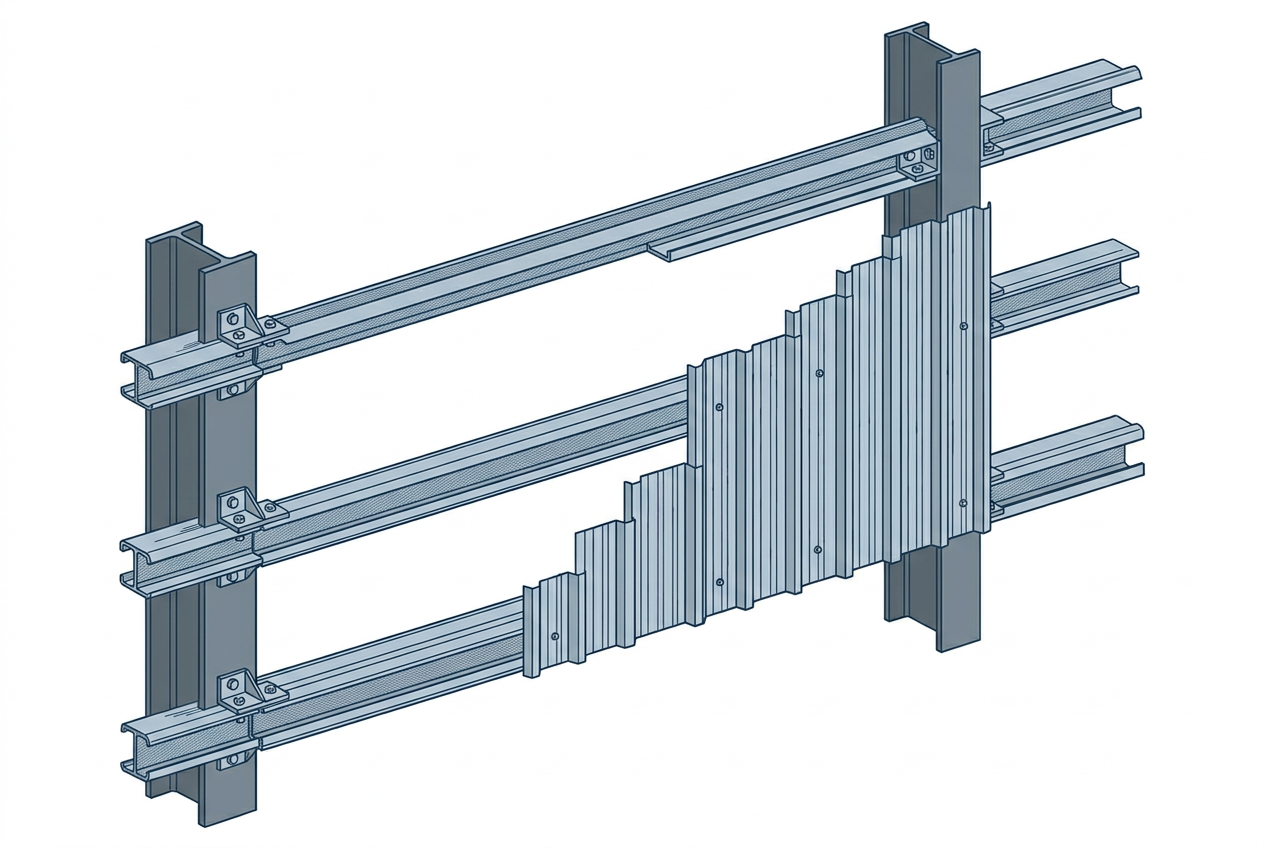
In short : The wall equivalent of a purlin: horizontal profile fixed to columns supporting wall cladding sheets. Loaded mostly by wind (pressure/suction) and its self-weight.
- •Profiles: channel UPN/UAP 80-120 or cold-formed Z/C
- •Vertical spacing: 1.2-1.8 m
- •Anti-sag rods between distant columns
- •First rail at ~0.2 m above ground (masonry plinth common)
- ✗Ignoring vertical self-weight bending (sagging rail)
- ✗Forgetting wind suction (cladding pull-off)
- ✗No plinth: sheets corroding at ground contact
Frequently asked questions
What is the role of: wall side rail (girt)?
The wall equivalent of a purlin: horizontal profile fixed to columns supporting wall cladding sheets. Loaded mostly by wind (pressure/suction) and its self-weight.
What are typical dimensions and rules for wall side rail (girt)?
Profiles: channel UPN/UAP 80-120 or cold-formed Z/C. Vertical spacing: 1.2-1.8 m. Anti-sag rods between distant columns. First rail at ~0.2 m above ground (masonry plinth common).
What mistakes should I avoid with wall side rail (girt)?
Ignoring vertical self-weight bending (sagging rail). Forgetting wind suction (cladding pull-off). No plinth: sheets corroding at ground contact.
Unsure about your site? DiasporaBuild's verified engineers and contractors review your drawings and execution.