Cement render
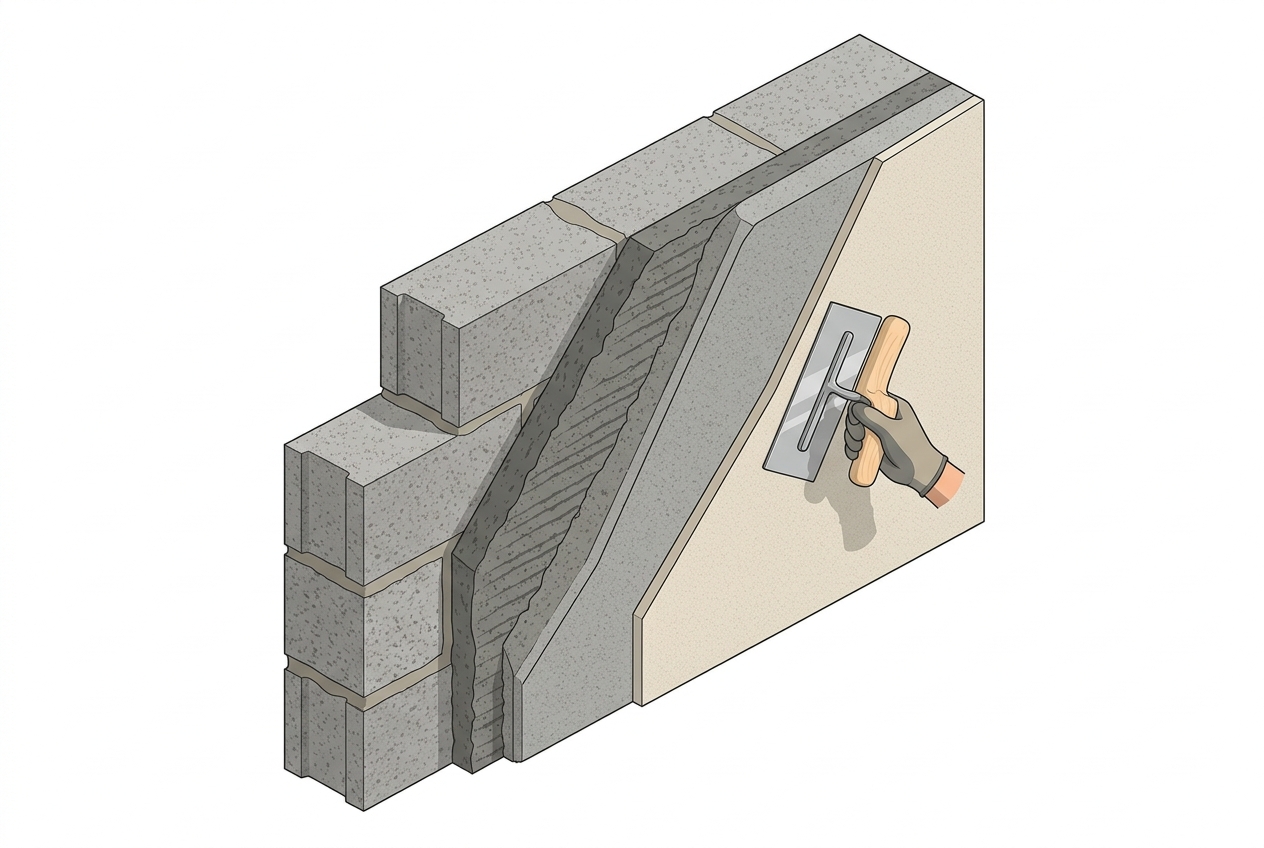
In short : Cement render protects block or brick walls from rain and moisture and prepares the paint finish. It is applied in three coats to limit cracking.
- •Scratch coat: fluid mortar 1:2 to 1:3, thrown for key
- •Body coat: mortar 1:3 to 1:4, thickness 10-15 mm
- •Finish coat: fine mortar 1:4 to 1:5, 5 mm, floated or scraped
- •Wet 2-3 times a day for 3 days (especially in hot weather)
- •Mesh reinforcement at concrete/masonry junctions to prevent cracks
- ✗Single thick coat: cracks and delamination
- ✗Dusty or undamped substrate before application
- ✗Unwashed sea sand (salt): efflorescence and corrosion
- ✗Application in full sun without wetting
Local prices by country
Frequently asked questions
How much cement to render 100 m²?
For about 20 mm total thickness, plan 2 m³ of mortar, i.e. roughly 12-15 bags of 50 kg cement.
What is the role of: cement render?
Cement render protects block or brick walls from rain and moisture and prepares the paint finish. It is applied in three coats to limit cracking.
What are typical dimensions and rules for cement render?
Scratch coat: fluid mortar 1:2 to 1:3, thrown for key. Body coat: mortar 1:3 to 1:4, thickness 10-15 mm. Finish coat: fine mortar 1:4 to 1:5, 5 mm, floated or scraped. Wet 2-3 times a day for 3 days (especially in hot weather). Mesh reinforcement at concrete/masonry junctions to prevent cracks.
What mistakes should I avoid with cement render?
Single thick coat: cracks and delamination. Dusty or undamped substrate before application. Unwashed sea sand (salt): efflorescence and corrosion. Application in full sun without wetting.
Unsure about your site? DiasporaBuild's verified engineers and contractors review your drawings and execution.