Concrete block wall
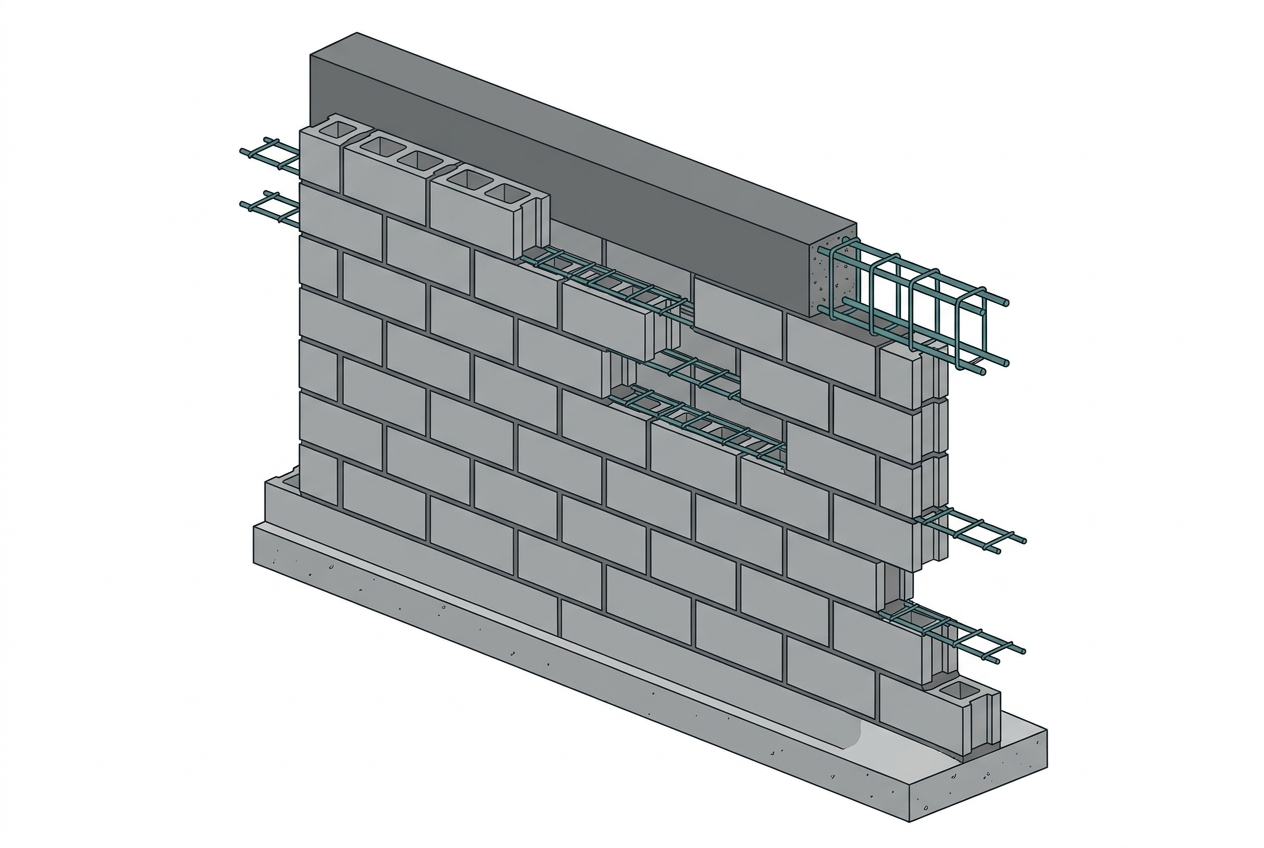
In short : The cement block wall is the most widespread masonry system in Africa: it encloses and partitions the building and, once framed by reinforced concrete ring beams and columns, carries light floors.
- •Common blocks: 10, 15 and 20 cm thick (15 cm for light load-bearing partitions, 20 cm for external and load-bearing walls)
- •Usual size: 40 × 20 cm; about 12.5 blocks per m²
- •Laying mortar: roughly 1 part cement to 4-5 parts sand, 1 cm joints
- •Horizontal ring beam every 2.5-3 m of height and vertical ties at corners and openings
- •Quality blocks: minimum 4 MPa for load-bearing walls; cured 28 days, never laid fresh
- ✗Blocks laid too fresh or dry: shrinkage cracks
- ✗No ring beam or lintels above openings
- ✗Aligned vertical joints (no bonding): stair-step cracking
- ✗Mortar too lean or clayey sand
Local prices by country
Frequently asked questions
How many blocks per m² of wall?
About 12.5 blocks of 40 × 20 cm per m², plus 5% breakage. For a 30 m² wall plan around 390 blocks.
15 cm or 20 cm thickness?
15 cm suits partitions and small framed buildings; 20 cm is better for external, load-bearing or rain-exposed walls.
What is the role of: concrete block wall?
The cement block wall is the most widespread masonry system in Africa: it encloses and partitions the building and, once framed by reinforced concrete ring beams and columns, carries light floors.
What are typical dimensions and rules for concrete block wall?
Common blocks: 10, 15 and 20 cm thick (15 cm for light load-bearing partitions, 20 cm for external and load-bearing walls). Usual size: 40 × 20 cm; about 12.5 blocks per m². Laying mortar: roughly 1 part cement to 4-5 parts sand, 1 cm joints. Horizontal ring beam every 2.5-3 m of height and vertical ties at corners and openings. Quality blocks: minimum 4 MPa for load-bearing walls; cured 28 days, never laid fresh.
What mistakes should I avoid with concrete block wall?
Blocks laid too fresh or dry: shrinkage cracks. No ring beam or lintels above openings. Aligned vertical joints (no bonding): stair-step cracking. Mortar too lean or clayey sand.
Unsure about your site? DiasporaBuild's verified engineers and contractors review your drawings and execution.