Steel sheet roof (corrugated)
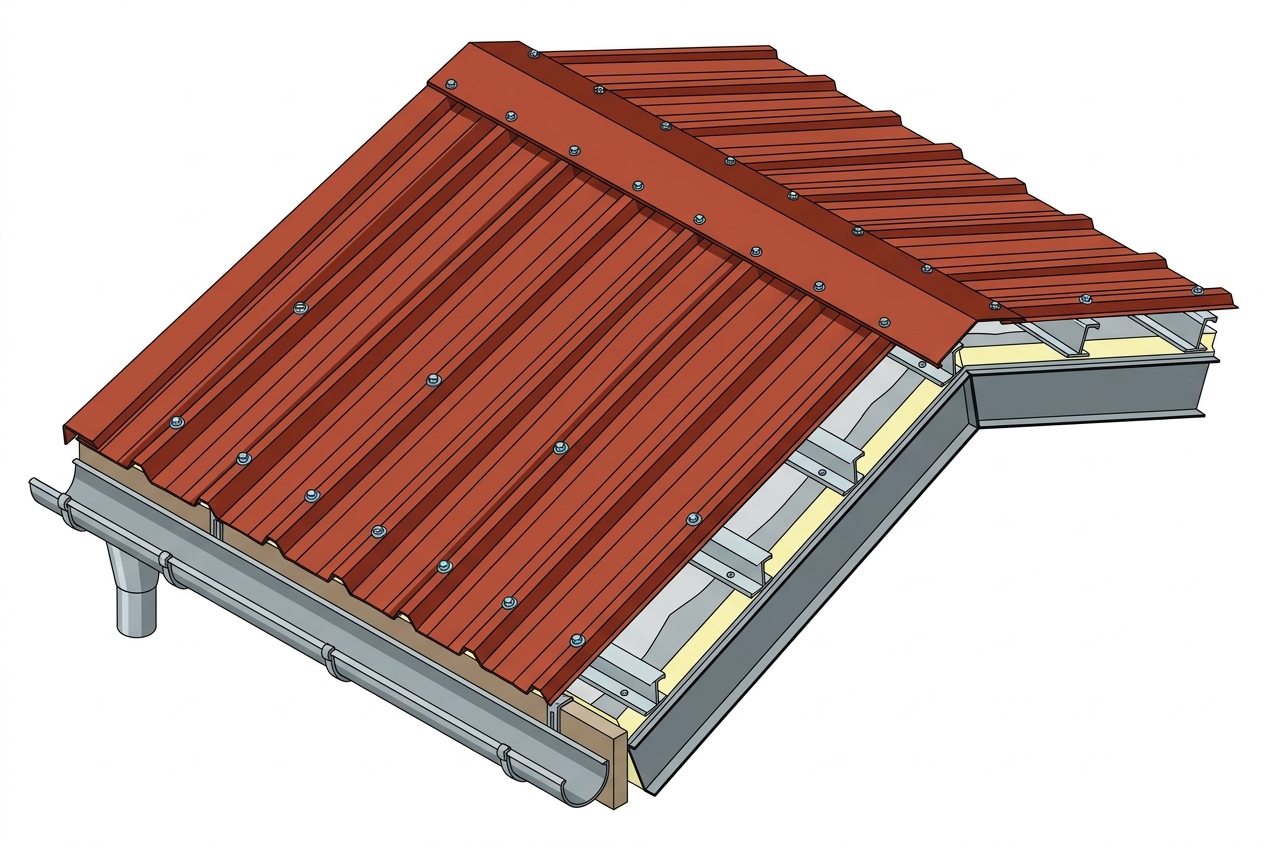
In short : The corrugated steel sheet roof is the most common roofing in Africa: light, quick to install and economical, it rests on a timber or steel frame and sheds rainwater quickly.
- •Sheet thickness: 0.30-0.50 mm (0.40 mm minimum recommended), galvanized or pre-painted
- •Minimum slope: 10-15% (about 6-9°); 20 cm end lap and one-corrugation side lap
- •Purlin spacing: 0.8-1.2 m depending on sheet thickness
- •Fixing: self-drilling screws with sealing washers, about 6-8 per m²
- •Under-roof insulation (mineral wool, reflective film) to limit heat and rain noise
- ✗Sheet too thin (0.25 mm): fast corrosion, wind distortion
- ✗Slope too low: leaks at laps
- ✗Screws without washers or over-tightened: leaks
- ✗No insulation: heat and rain noise
Local prices by country
Frequently asked questions
How many sheets for a 100 m² roof?
Count the real area (including slope, about 105-115 m² for 100 m² on plan) plus 10% for laps and offcuts.
Which sheet thickness?
0.40 mm is a good compromise for a house; 0.50 mm for windy areas or public roofs.
What is the role of: steel sheet roof (corrugated)?
The corrugated steel sheet roof is the most common roofing in Africa: light, quick to install and economical, it rests on a timber or steel frame and sheds rainwater quickly.
What are typical dimensions and rules for steel sheet roof (corrugated)?
Sheet thickness: 0.30-0.50 mm (0.40 mm minimum recommended), galvanized or pre-painted. Minimum slope: 10-15% (about 6-9°); 20 cm end lap and one-corrugation side lap. Purlin spacing: 0.8-1.2 m depending on sheet thickness. Fixing: self-drilling screws with sealing washers, about 6-8 per m². Under-roof insulation (mineral wool, reflective film) to limit heat and rain noise.
What mistakes should I avoid with steel sheet roof (corrugated)?
Sheet too thin (0.25 mm): fast corrosion, wind distortion. Slope too low: leaks at laps. Screws without washers or over-tightened: leaks. No insulation: heat and rain noise.
Unsure about your site? DiasporaBuild's verified engineers and contractors review your drawings and execution.