Retaining wall
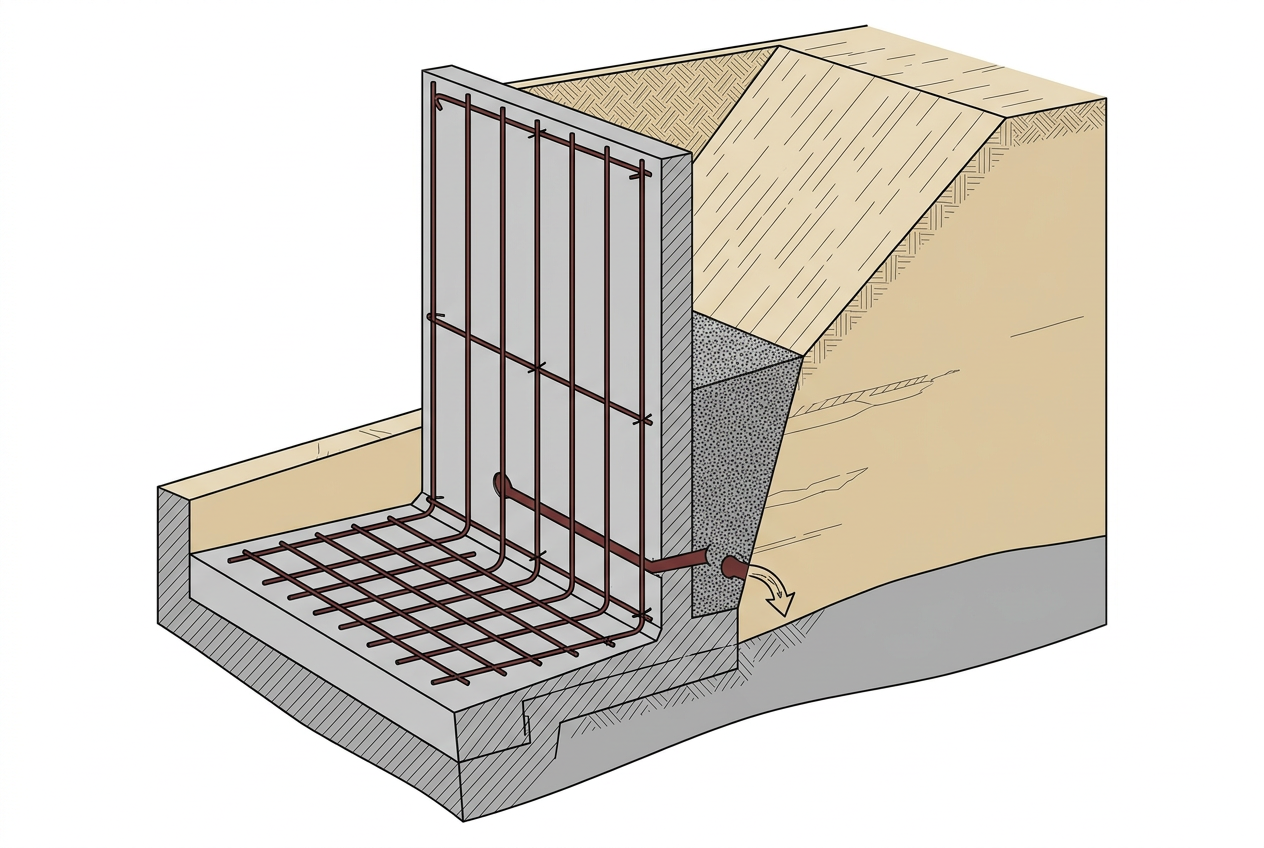
In short : L-shaped wall holding back earth on sloping ground: the soil weight on its base stabilizes it against the thrust. Drainage behind the wall is as vital as the rebar — trapped water doubles the thrust.
- •Stem: thickness ≈ H/10 to H/12, vertical bars on the soil side
- •Base: width ≈ 0.5-0.7 × H, heel under the backfill
- •Weep holes every 2-3 m + gravel drain + geotextile
- •Expansion joints every 8-10 m
- ✗No drainage → wall overturns at the first heavy rain
- ✗Vertical bars on the outer face (wrong side!)
- ✗Backfilling before the concrete gains strength
Frequently asked questions
What is the role of: retaining wall?
L-shaped wall holding back earth on sloping ground: the soil weight on its base stabilizes it against the thrust. Drainage behind the wall is as vital as the rebar — trapped water doubles the thrust.
What are typical dimensions and rules for retaining wall?
Stem: thickness ≈ H/10 to H/12, vertical bars on the soil side. Base: width ≈ 0.5-0.7 × H, heel under the backfill. Weep holes every 2-3 m + gravel drain + geotextile. Expansion joints every 8-10 m.
What mistakes should I avoid with retaining wall?
No drainage → wall overturns at the first heavy rain. Vertical bars on the outer face (wrong side!). Backfilling before the concrete gains strength.
Unsure about your site? DiasporaBuild's verified engineers and contractors review your drawings and execution.