Steel connections
Understand steel frame joints: when to transfer moment, when to let rotation free. Illustrated, bilingual and free reference sheets.
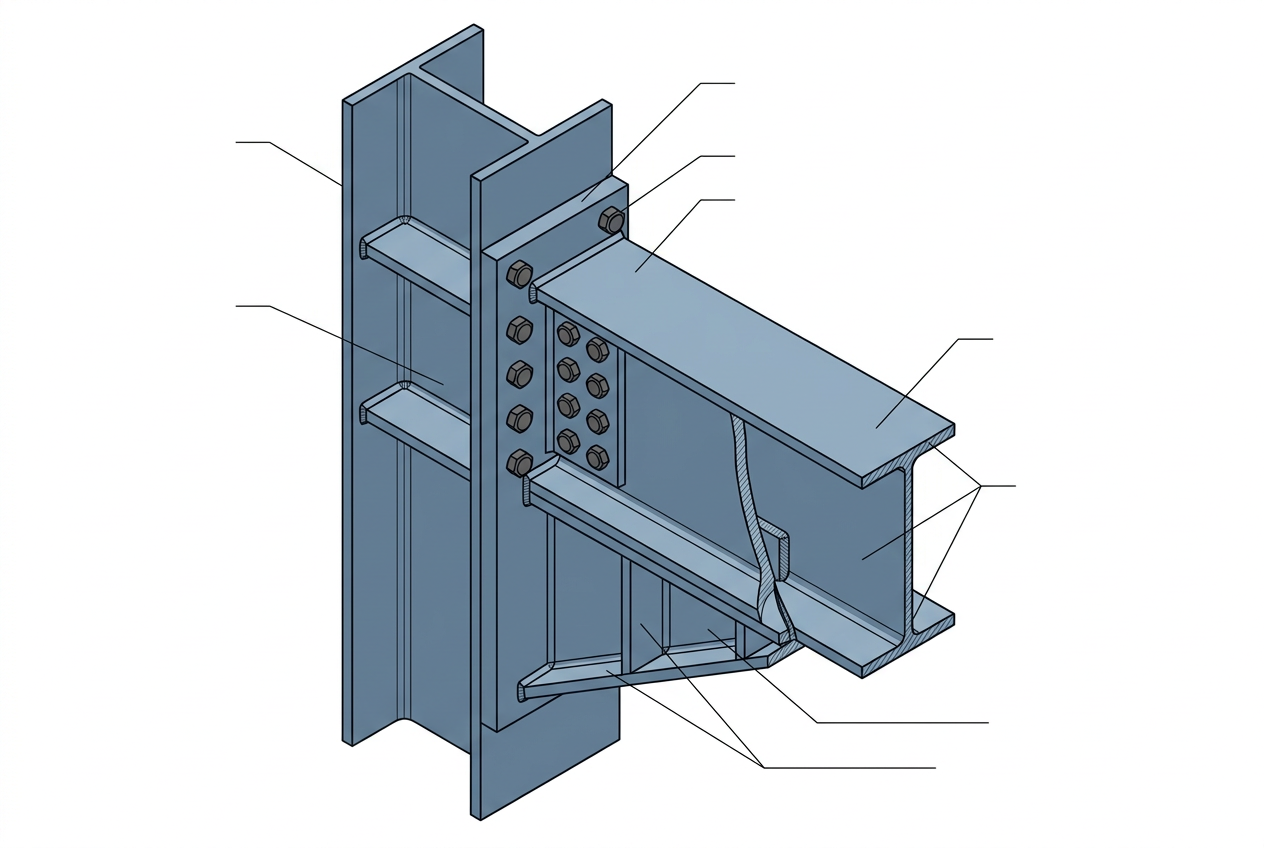
Rigid connection
Moment connection (extended end plate)
A moment connection transfers both shear forces AND bending moment between beam and column. Relative rotation is prevented: beam and column deform together. It is the key connection of moment-resisting frames (portal frames without in-plane bracing).
Read the sheet →
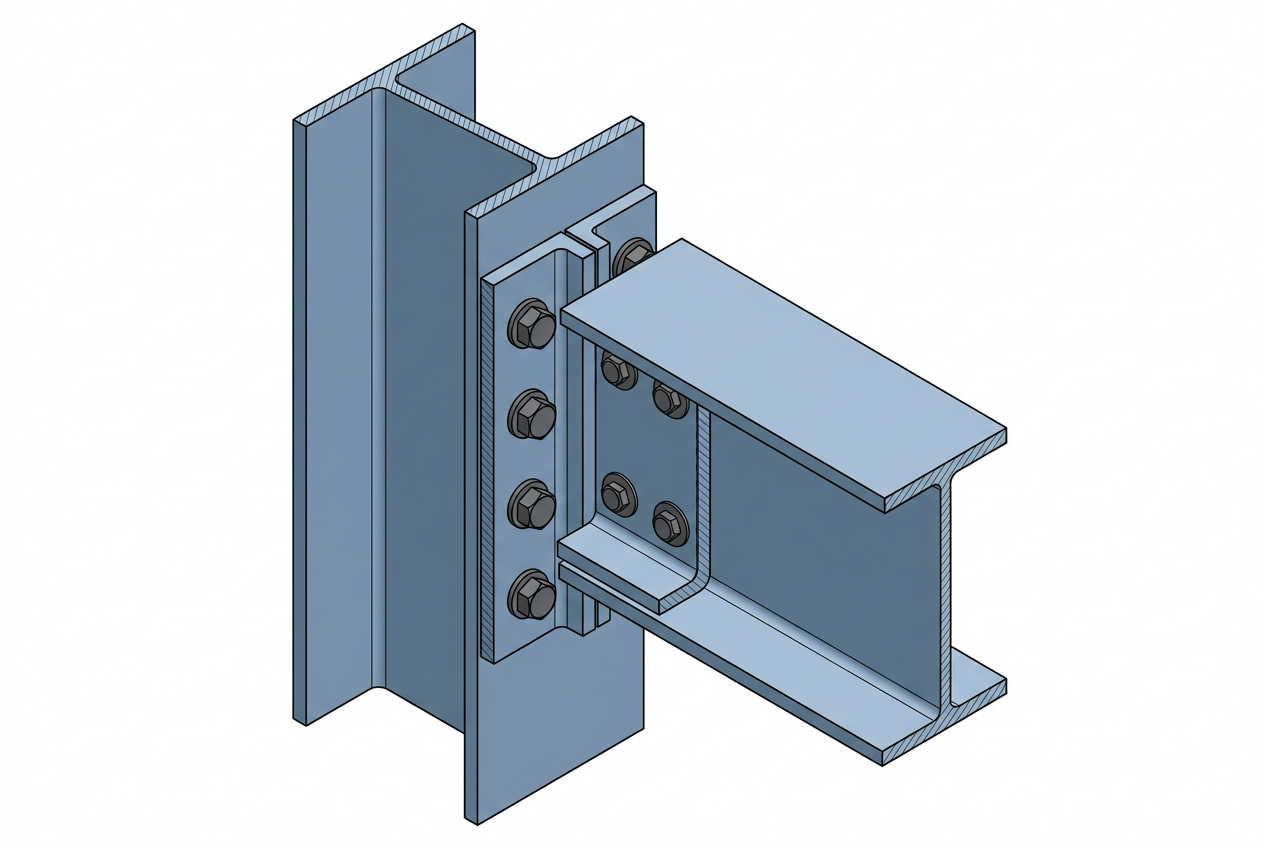
Pinned connection
Pinned connection (double angle cleats)
A pinned connection transfers shear only: rotation stays free. The beam is fixed to the column web with bolted angle cleats. It is the most economical and common connection for secondary beams — but the structure must then be stabilized by bracing.
Read the sheet →
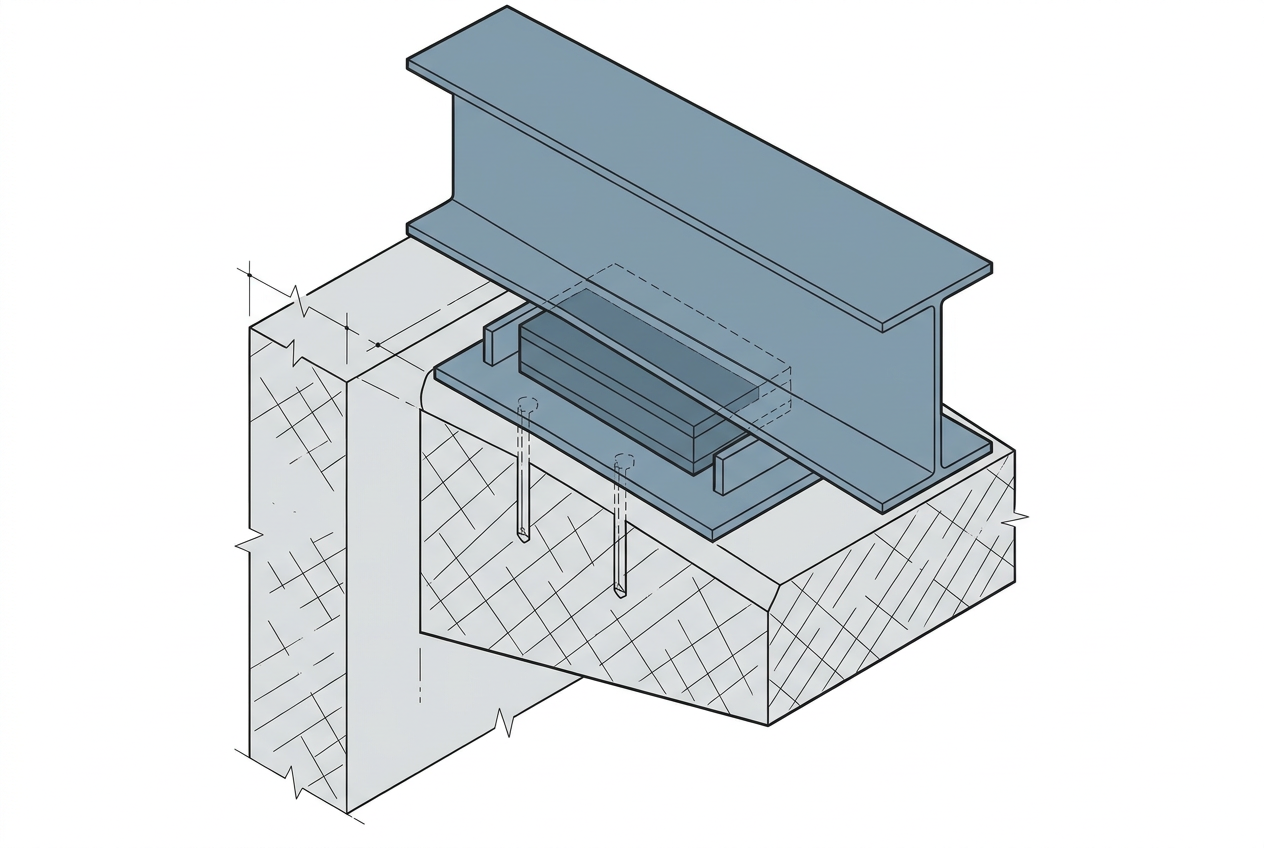
Bearing support
Simple bearing (beam on corbel/masonry)
The beam simply rests on a support (concrete corbel, masonry padstone or steel bracket), often via a seating plate and an elastomeric pad. Only the vertical reaction is transferred; rotation and slight expansion remain free. Common when a steel roof rests on blockwork or concrete walls — a very frequent case in Africa.
Read the sheet →
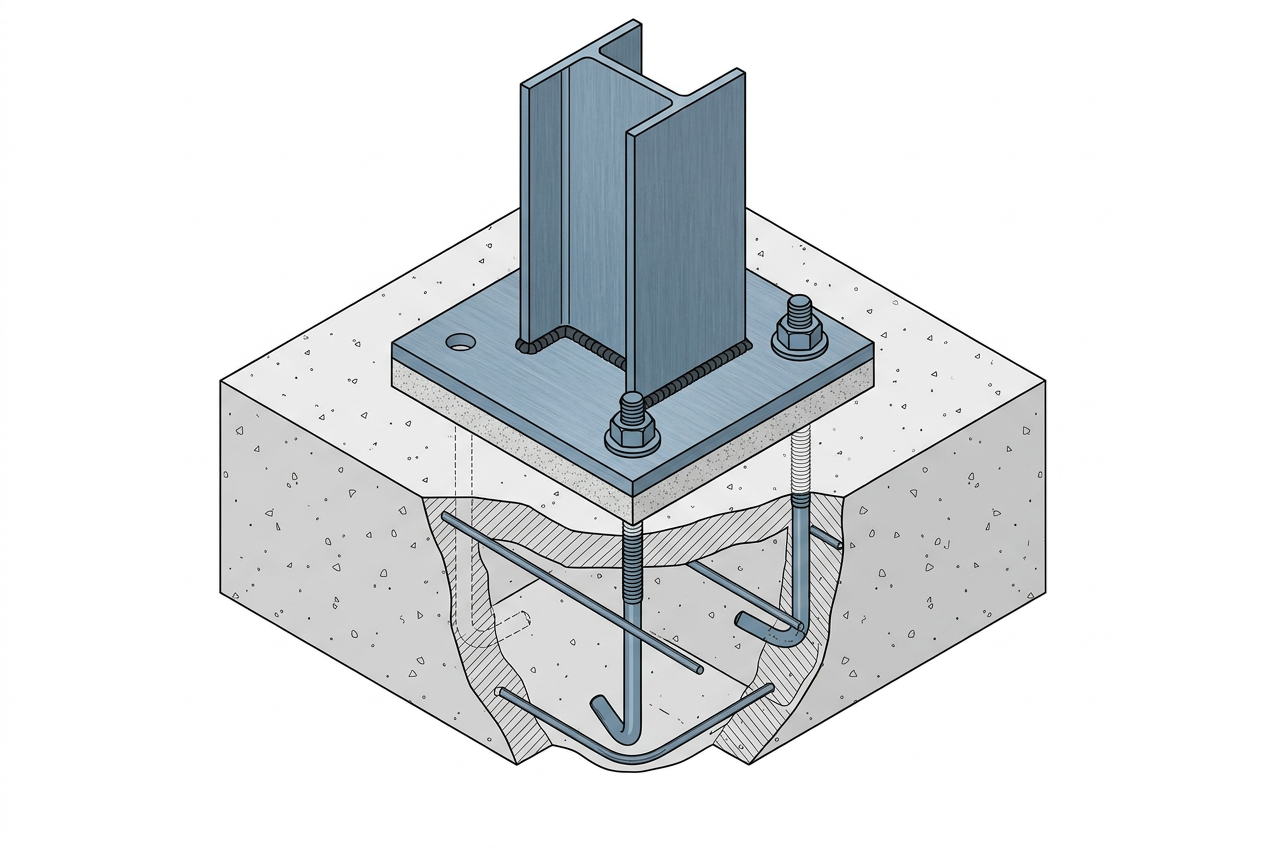
Column base
Pinned column base
The column is welded to a thin base plate fixed with 2 anchor bolts on the column axis. The base transfers axial and shear forces but no moment: the foundation stays small and economical. Horizontal stability must come from elsewhere (bracing, frame fixed at the top).
Read the sheet →
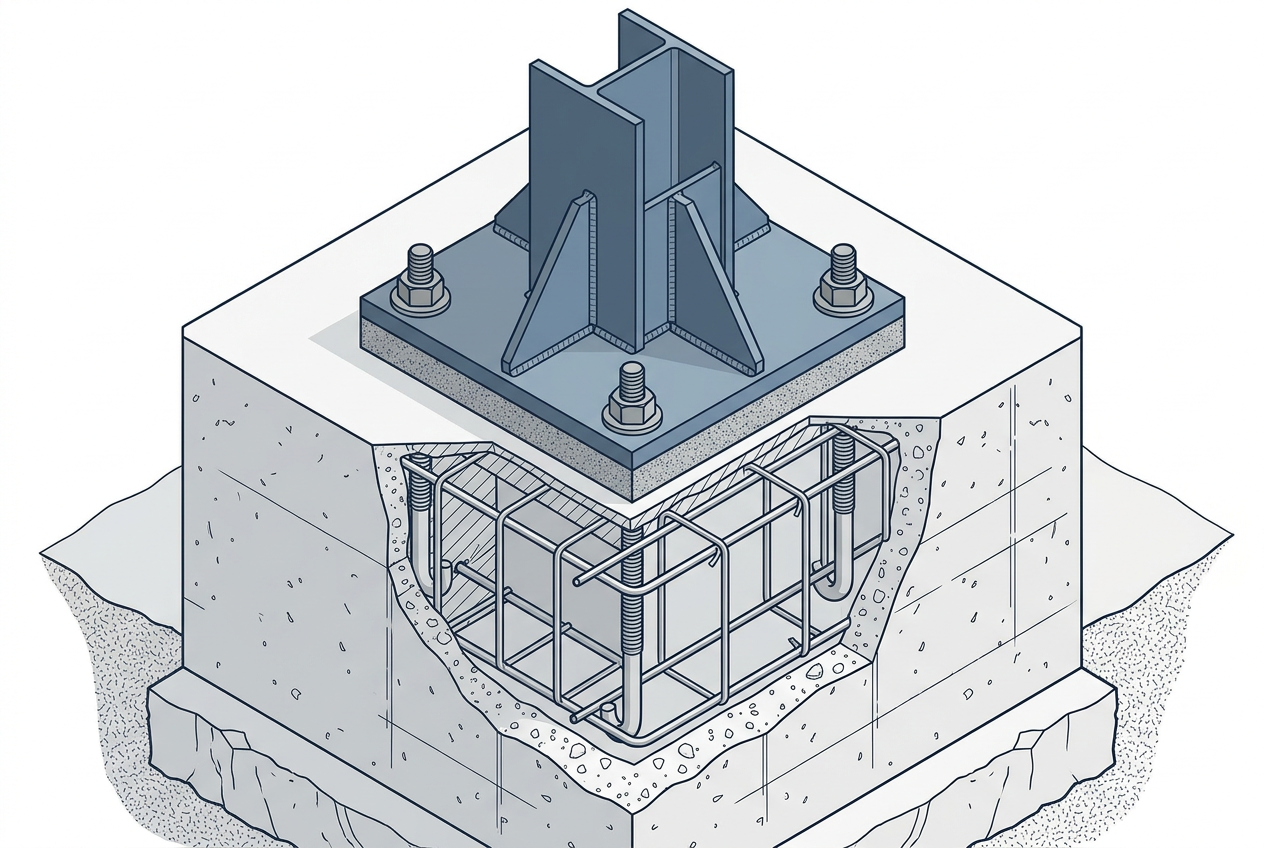
Column base
Fixed column base
Thick base plate, 4 corner anchor bolts and stiffener gussets: the base transfers a bending moment to the foundation. The column then contributes to horizontal stability (cantilever mast, portal). Trade-off: a significantly larger foundation block.
Read the sheet →
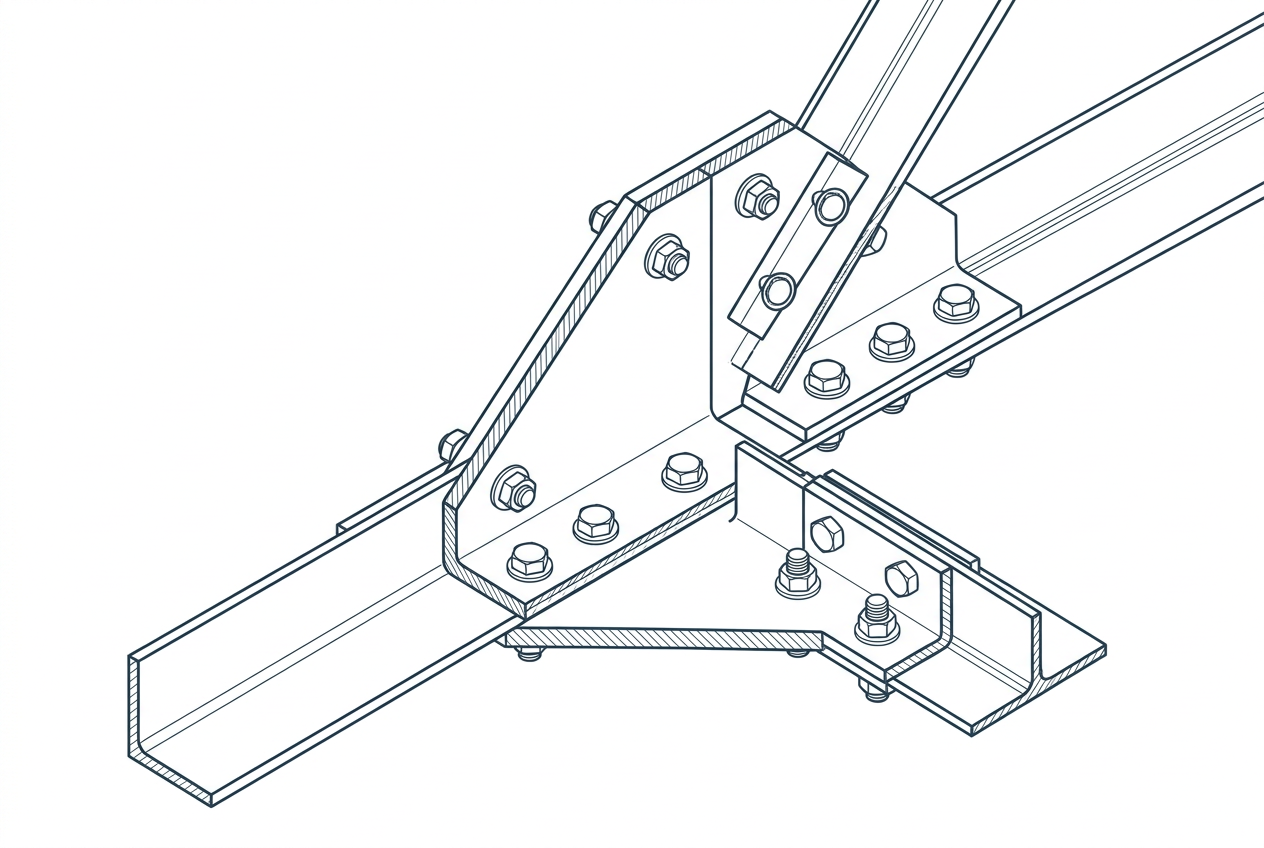
Truss node
Gusset plate (lattice truss node)
The gusset is the plate joining chords and diagonals at a lattice truss node. Members, loaded in pure tension/compression, are bolted or welded to it. Golden rule: member axes must converge at a single point (workline layout) to avoid parasitic moments.
Read the sheet →